

Government commits to a redress scheme for victims and survivors of child sexual abuse
A redress scheme for survivors of child sexual abuse is to be launched in England, which the Government says will “acknowledge the institutional failures that allowed children to suffer at the hands of despicable predators”.
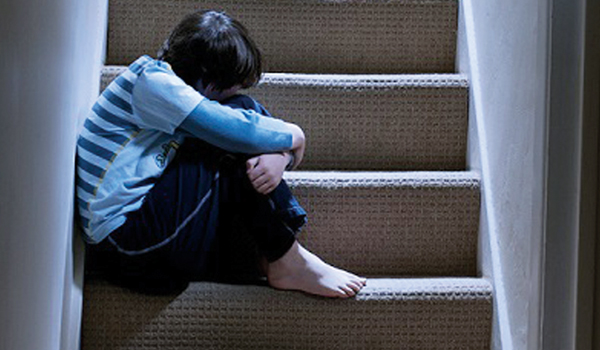
To be set up on the back of the Independent Inquiry into Child Sexual Abuse (IICSA), the scheme was announced by the Government on Monday (May 22)
Victims, survivors and charities representing them will be closely consulted as the Government develops the programme, which it says will recognise the trauma victims have suffered.
This will include asking who the scheme should support, how best to help them and how non-State institutions should be involved.
The Government said it is also “moving quickly” to introduce mandatory reporting of child sexual abuse in England, which will make it a legal requirement for those who work with young people to speak out if they suspect a child is being sexually abused or exploited.
This aims to help prevent the continued abuse of children and ensure that they receive support earlier.
A 12-week public call for evidence was also launched on Monday looking at how this should be implemented.
Prime Minister Rishi Sunak said: “Thousands of brave victims and survivors came forward to give evidence to the Independent Inquiry, sharing heart-breaking details of how they were ignored by the people who should have protected them.
“While nothing will make up for how badly they were let down, or the abuse that they suffered, we must make sure that victims and survivors get the support they need and redress they deserve.
“We will stop at nothing to stamp out these vile crimes, punish the perpetrators, and make sure every child across the country can grow up in a safe environment.”
The IICSA, chaired by Professor Alexis Jay, spent seven years examining widespread failings in both state and non-state institutions to properly safeguard and protect children in England and Wales.
The institutions investigated included government departments, the police, schools, local authorities, religious organisations, political parties and the Armed Services.
It heard from more than 6,000 victims of child sexual abuse and considered 4.2 million pieces of written evidence from charities, institutions and witnesses.
The Government said it has “listened to the voices of victims and survivors and reviewed the painstaking work of the Independent Inquiry over many years”. As a result, it has pledged to deliver “deep-rooted change” to make sure children are never again so badly let down by the very institutions that should have protected them.
Home Secretary Suella Braverman said: “Thanks to the brave testimony of thousands of courageous victims, this inquiry uncovered a dark and disturbing truth – that adults often turned a blind eye to the serious sexual abuse of the children under their care.
“No apology or compensation can turn the clock back on the harrowing abuse these victims suffered, but it is important survivors have that suffering recognised and acknowledged. That is what the compensation scheme will deliver.
“By bringing in mandatory reporting for adults working with children, we are shining a light on a crime which has for too long been hidden and silent. Today we are bringing this crime out of the shadows and saying no more. Perpetrators – you will have nowhere to hide.”
The views of victims and charities will also be extensively engaged on the future of therapeutic support, the Home Office said.
As part of its response to the IICSA, the Government said it is also:
- Looking at ways to improve access to therapeutic support for victims and survivors;
- Improving the way police collect data on child sexual abuse to better understand the scale and nature of the crime;
- Driving forward the world-leading Online Safety Bill, which will place clear legal duties on companies to remove child sexual abuse material and keep children safe on their services;
- Reforming the child protection system to make sure children are better protected; and
- Looking at options to extend the list of people barred from working with children.
Education Secretary Gillian Keegan said: “Every single person who came forward to give evidence to the inquiry showed immense bravery, and we owe them a debt of thanks for making sure that sexual abuse will never be allowed to go under the radar again.
“I am absolutely determined to make sure the reform already underway in children’s social care, in child protection, and across society delivers the change that is needed.
“The work we are undertaking on mandatory reporting is vital to fully address the concerns raised through the independent review, and I would encourage victims and survivors, as well as children and those that work with children, to share your thoughts – your voices must continue to be heard.”
The Children’s Commissioner Dame Rachel de Souza said the Government’s commitment to a redress scheme for victims and survivors of child sexual abuse was “a positive step towards ensuring that all victims get the support and recognition they deserve, as well as the chance to be heard”.
“But protecting these children must remain a priority and more is needed to ensure Government addresses the remaining recommendations through robust measures to support every child victims, through the implementation of the children’s social care review, the Victims and Prisoners Bill, and the Online Safety Bill,” she added.
“It’s right to ensure that mandatory reporting is implemented effectively and with care, so I will be responding to the call for evidence on mandatory reporting to ensure that the voices of children are heard.”
The measures build on the Government’s pledge last month to tackle grooming gangs through a new task force, which will see specialist officers “parachuted in” to assist police forces with live child sexual exploitation and grooming investigations to bring more of these criminals to justice.
Ian Dean, director of the Centre of expertise on child sexual abuse (CSA Centre), commented: “Today the Government made a welcome and important pledge to secure lasting change in the prevention of child sexual abuse and the response provided to children who have been sexually abused.
“Alongside commitments to provide compensation to victims of sexual abuse, these are valuable first steps to address the issues identified by the IICSA. However, the details of these announcements will be decided following further consultation, and those details are incredibly important. It is vital that the Government honours its commitments to victims and survivors, and to protecting children today from sexual abuse in the future.
“Based on our conservative estimates, one in ten children will experience some form of sexual abuse before the age of 16 in England and Wales. Yet core training for professionals working with children still routinely fails to cover identifying and responding to child sexual abuse, and action to address this was notably absent in today’s announcements.
“We need to ensure that all professionals with safeguarding roles – including social workers, teachers, police officers, GPs, etc, are properly trained and supported to have the knowledge, skills and confidence to better protect children.
“As a society it is not just that we don’t see child sexual abuse, we don’t want to see it – especially when it is happening close to us, we just don’t want it to be true.
“It is only by recognising that sexual abuse is happening to children and acting to protect them, that we can secure lasting change. Today’s commitments must not be the last word; improving prevention and identification of and response to child sexual abuse must be a standing item at the top of the Government’s agenda now and in future.”
Alan Collins, partner in the abuse team at Hugh James Solicitors, said survivors, “and indeed the general public”, will judge the Government by actions and not mere words no matter how crafted when it comes to implementing the IICSA recommendations.
“The Government points to what it says are the steps it has taken in recent years in addressing child sexual abuse in this country which is endemic and shows no signs of abating,” he said.
“Those actions have to be weighed with the inaction on its part, with the repeated litany of ‘lessons have been learnt’ being trotted out time after time in the wake of yet another child abuse tragedy.
“The fact is that to suggest the errors have been recognised and the lessons learnt form them is too often idle jest. The general public is rightly sceptical, and one has only to look at the annual reports of the Inspectorate of Probation to see the reality of public protection failings.
“I am pleased to see that the Home Secretary welcomes the need for a change in ‘culture’ but what does she really mean by this?
“I ask the question in light of the Government’s apparent acceptance that there needs to be mandatory reporting law in this country. I have repeated said when asked that the law is needed to change culture in our institutions viz social services; police; education; so that any child safeguarding concerns are reported and addressed. The ‘grooming’ scandals revealed a chronic abdication of responsibility, and why such a law is necessary.
“It goes further, though, because where does the buck stop when it comes to child safeguarding? It lies with government and its institutions. It is very difficult for a survivor and/or his/her family to achieve accountability when abuse occurs, and far too often when it results in a death.
“The resulting inquires invariably reveal a familiar pattern of failure – the lack of ‘professional curiosity’; the failure to check records, or to act on information. What is glaring is the absence of accountability, or to put it another way the absence of a consequence for those that failed.
“If the Home Secretary means what she says on the time that there has to be a change in culture then she needs to start with government and its institutions.
“She talks of victims legislation, which no doubt is welcome, but she needs to introduce to this the concept of accountability that is a legal right to hold to account those who fail. Only then do we stand a chance of seeing the cultural change that is so badly needed to ensure that our children and young people are better safeguarded.”