
Continuing capabilities
One of the most transformational policing initiatives is about to end this month as funding streams for major projects are reformed. There is now a burning need for police leaders to progress the lessons learnt to develop specialist capabilities locally, regionally and nationally.
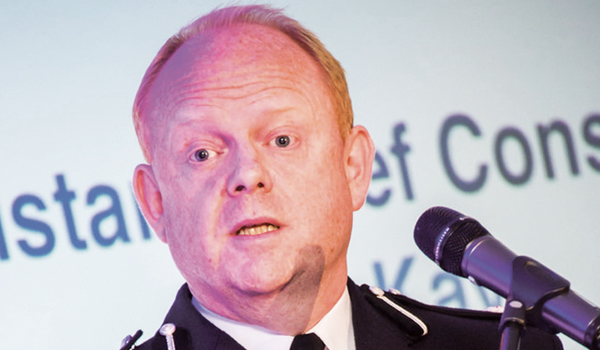
The Specialist Capabilities Programme (SCP) closes at the end of March having changed the way many aspects of law enforcement, from firearms to collision forensics, are managed across England and Wales.
Now, forces and police and crime commissioners (PCCs) are more aware of the need to work together to secure efficiencies and ensure they can invest in what matters locally, as well as lifting the quality and consistency of vital, and often costly, specialist activities.
“Everyone agrees that forces face variable levels of threat, harm and risk, and that working in silos in which each force keeps trying to build equal capacity and capability cannot deliver the best policing or the best value for money,” SCP Director Phil Kay explains.
While each force – no matter its size or the demands it faces – has traditionally invested vast sums of money in training, equipment and personnel to establish and maintain its own specialist capabilities, such as counter-terror firearms, surveillance and technical support, there has been a sizeable shift in their perception of how these services can be organised as a result of the SCP.
Through a networked approach, the programme has made forces aware of how they can avoid wasting many millions of pounds on capabilities, some of which they would rarely, if ever, need.
Greater expertise
And if specialist teams, such as surveillance officers, are provided in a collaborated or lead force arrangement, they are more likely to be regularly utlising their skills and have greater expertise than those who rarely get to use them.
The programme has worked with chief officers and PCCs to change their perception so they can invest more in territorial policing while actually improving the quality of specialist capabilities they have access to, providing a more agile and better-value response to new and evolving threats.
Mr Kay said an immense amount of work has been done across many aspects of policing, releasing vast sums of money to forces and transforming specialist resources.
For example, the development of a Forensic Collision Investigation Network (FCIN) is now professionalising the response to the management of collision scenes and enabling forces to achieve full ISO accreditation with the Forensic Regulator. This is a huge step-change as forces had identified this issue as potentially costing £44 million on method validation alone – a saving that can be ploughed back into vital local services.
The programme has also assisted in the creation of a fully connected and interoperable national Surveillance Operations Room that meets a wide range of police needs in a way that local forces could never achieve individually.
Mr Kay says the focus on capability leadership has inspired a further step-change in the mindset of those responsible for the development of specific capabilities – often chief constables – who have embraced a more disciplined approach.
Under previous arrangements, these chief officers, typically alongside a staff officer, worked to drive improvements nationally alongside their busy day jobs and through committee structures. The programme has instead funded full-time capability managers to take a more proactive coordinating role, establishing strategies, annual plans, capability maturity assessments and investment in priority areas focused on new and emerging threats.
Policing responses
Data has been critical to developing an understanding of how each capability should be organised, resourced, managed and delivered.
“How can policing respond to threat without evidence of what it is, where it is, what resource is needed to combat it, what policing responses work best and so on?” Mr Kay asks.
National data dashboards have provided the solution. For example, in April 2019, a national pilot went live to show the demand, deployments, tactical activity, outcomes, use of equipment and research and development in regard to technical support and surveillance.
Bringing together data from across UK policing, the Counter Terrorism Network and the National Crime Agency, for the first time ever forces had a national view of what capability is available and being used.
This evidence is vital in enabling regional organised crime units, forces and managers to make more informed decisions and allow greater interoperability between forces, Mr Kay suggests.
And national capability lead for surveillance, Deputy Chief Constable Chris Haward, recently praised the operational benefits of the information available.
Mr Haward told a recent Surveillance Delivery Board meeting that by owning the data dashboards he is able to highlight the effectiveness of various tactics under different circumstances and with varying levels of deployment and cost.
In December, the SCP began a collaboration with Avon and Somerset Constabulary’s Data Science Innovation Centre (DISC) to develop two further dashboards for armed policing and the National Policing Coordination Centre (NPoCC). All four data dashboards are due to go live nationally at the end of March 2020.
The programme has also developed an Economic User Guide, which explores the key principles of collaboration design, implementation and refinement over time. The guide was instrumental in the plan to develop ‘dynamic search’ capabilities by the Counter Terrorist Specialist Firearms Officer (CTSFO) network – an arrangement that had the potential to create an alternative funding model (part subscription, part pay-as-you go) and release efficiency benefits to individual forces that would avoid the training and equipment costs of maintaining this rarely-used capability locally.
Evidence base
All of this reform has been driven through two critical products for policing – the Law Enforcement Capability Assessment (LECA) and the Capability Transformation Toolkit (CTT).
The LECA identifies the most efficient way for capabilities to be organised, held and delivered at local, regional and national levels. It also provides forces with the evidence base for decisions about future collaboration and partnerships, showing whether forces have sufficient access to the right capabilities to effectively respond to the threats they face.
The CTT is a roadmap for capability development, bringing together the methods and tools designed and used by the SCP for a wider audience across UK policing, in particular for those leading national capabilities.
Mr Kay said the tools have advanced the move towards capability-led policing, but the most important legacy of the programme is the progress that has been made across the capabilities themselves.
Vital capabilities, such as the FCIN, armed policing, roads intelligence, analysis, reviews, CCTV, intelligence receipt and assess, internet intelligence and investigations, cyber and surveillance are now better equipped to thrive as a result of the national leadership, data development and economic assessments that have been created by highly committed and knowledgeable capability managers and capability advisers.
More information is available on these developments via the SCP Knowledgehub or by connecting with the capability leads direct.
While the SCP has come to the end of the road, Mr Kay believes it is far from the end of capability-led policing or of using network principles to get the best out of the policing system.
“I passionately believe that the public deserve better policing and better value for money. I am also proud of the legacy of the programme. We have, I believe, inspired a quiet cultural revolution in the attitude of chief officers and PCCs across UK policing towards rebalancing the system so that it is more effective and more efficient,” he said.
“As shareholders in this vital public service we all have a duty to ensure that we do not let this work wither away.”